

By IGG Maha Adi
Director Green Press Indonesia
Indonesia seems to be at the center of the debate about women, climate, and tokenism. In spite of encouraging statistics regarding the representation of women in politics, the presence of a specific ministry responsible for handling problems that arise from the impact of climate change, and another focusing on the rights of women and children, in reality, the issue remains unresolved.
Women and climate in Indonesia are not handled through specific programs but through political promises. Women are thus ill-equipped to deal with the consequences of climate change due to the lack of necessary measures taken by Indonesian government institutions.
At first glance, Indonesia appears to have joined the worldwide movement concerning women and climate, and made certain commitments towards the empowerment of women and handling of climate-induced vulnerabilities. Upon closer inspection, however, it becomes clear that these promises are just empty words which dissipate in the political whirlpool of Indonesia.
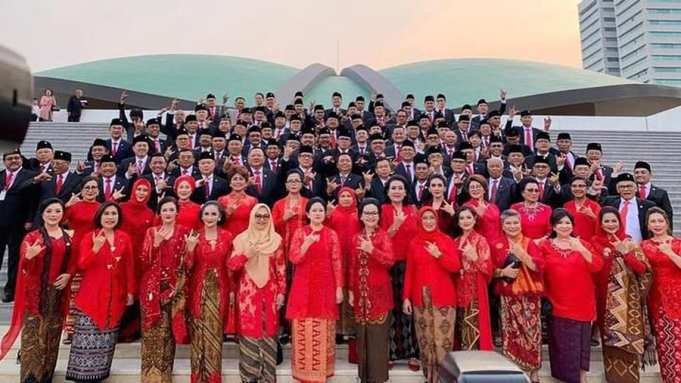
The presence of 30% women in parliament as the benchmark for women’s representation fails to guarantee that legislative actions will be strong enough in terms of a gender-based approach. As an illustration of this contradiction, the law approving the Omnibus Law in 2020 did not make any changes to the situation of female workers, but, on the contrary, made it even worse. Such inconsistencies lead to poverty and violence against women.
Although Indonesia boasts a Ministry of Women Empowerment and Child Protection, closer examination shows a disturbing lack of transparent sustainable programs, budget, and strategic plans aimed at solving the multiple problems that arise from the connection between women and climate in Indonesia. The existence of such ministry is not enough – it is only its actions that indicate a real willingness to solve the problems of women, especially concerning the problem of climate change.
Similarly, a ministry which is supposed to handle the impacts of climate change has been inconsistent in terms of rhetoric and actions. Despite women and climate being a focal point of this ministry, there is a noticeable lack of any specific initiatives focused on helping women in particular to deal with the impact of climate change.
The danger of tokenism lies in the fact that such approach to the problem serves as a means to satisfy the public opinion rather than solve the problem of concern. Thus, the narrative on women and climate becomes a pawn in a political chess game, elevated as a mean of satisfying people’s expectations or creating an illusion of justice.
In order to get rid of the trap of tokenism, Indonesia needs to take some action. There should be a paradigm shift in this situation which would require taking a more holistic approach involving gender-responsiveness and the problem of climate change. Firstly, the 30% of women in parliament should result in legislation which does not simply protect the rights of women but empowers them in their fight with the consequences of climate change.
The omnibus law from 2020 should motivate legislators to focus on developing gender-responsive laws. Secondly, the ministry for women and children should evolve from being an instrument of bureaucracy to being a true driving force of change. It should come with sustainable programs, budget allocation, and strategic plans demonstrating the dedication of this institution to women’s issues, especially in terms of climate change.
Lastly, the ministry dealing with the impacts of climate change should convert its rhetoric into real actions. It requires developing programs specifically targeted at the challenges and needs of women in the context of climate change. It includes building up women’s resilience, creating economic opportunities, and amplification of women’s voices in the process of making decisions related to environmental legislation.
In summary, Indonesia finds itself on the cusp between rhetoric and actions. The current tokenism around women and climate is harmful both for the country’s progress and for the vulnerable groups of people. By redefining priorities, budget allocation and development of gender-sensitive policies, Indonesia will be able to become a beacon of substantive change rather than falling victim to tokenism.
_* The first version was published on March 8, 2024. Accessibility issues on the initial website have led to this opinion being republished._